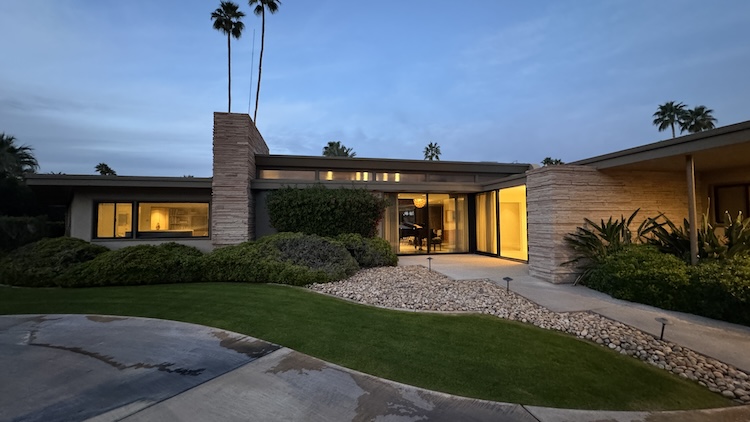


Frank Sinatra’s Palm Springs home stands as one of the most iconic homes of mid-century modern architecture—and a lasting symbol of Hollywood glamour in the desert. Nestled in the sun-drenched landscape of the Coachella Valley, Twin Palms was more than just a celebrity residence. It represents a pivotal moment in both Sinatra’s career and the architectural identity of Palm Springs.
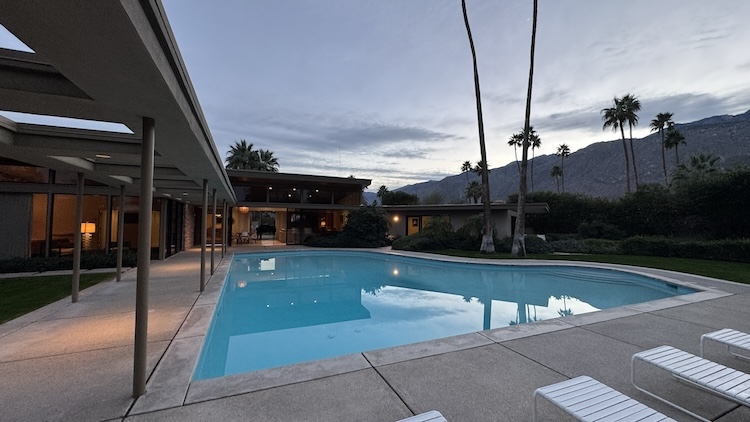
During an extended stay in Palm Springs I was fortunate enough to be a guest at Twin Palms - a rare opportunity as the home is still privately owned. It was truly a bucket list experience to visit Frank Sinatra's house. To walk through the same halls and look out at the piano shaped pool where a young Frank Sinatra once schmoozed with Hollywood elite - was awesome.
The History of Twin Palms - Sinatra's Palm Springs Home
The story of Twin Palms begins in 1947, when Sinatra—already a major star but still early in his legendary career—decided to build a desert retreat. He commissioned architect E. Stewart Williams, who would later become one of the most influential figures in Palm Springs modernism. Initially, Sinatra imagined a traditional Georgian-style home, but Williams convinced him to embrace a bold, modernist approach better suited to the desert climate. That decision would help define the architectural direction of the city for decades to come.
Completed later that same year, Frank Sinatra's house was Williams’s first residential commission and an early showcase of what became known as Desert Modernism. The single-story home emphasized clean horizontal lines, steel and glass construction, and seamless indoor-outdoor living. Its most famous feature—the piano-shaped swimming pool, was a playful nod to Sinatra’s musical career and quickly became a visual trademark of the estate. The home included four bedrooms, seven bathrooms, and generous entertaining spaces designed for both privacy and parties.
Sinatra lived at Twin Palms during a formative period of his life. He shared the home with his first wife, Nancy Barbato, and their children, including Nancy Sinatra. The estate became a gathering place for Hollywood elites, musicians, and friends drawn to Palm Springs’ growing reputation as a celebrity enclave. Following Sinatra’s divorce and subsequent marriage to Ava Gardner, the home witnessed both lavish social events and turbulent personal moments, contributing to its enduring Hollywood lore.
By 1957, Sinatra sold Twin Palms, moving on as his career entered a new phase. Over the following decades, the home passed through several owners and gradually fell into disrepair. Despite its architectural importance, it narrowly avoided demolition before being rediscovered by preservation-minded buyers in the late 1990s.
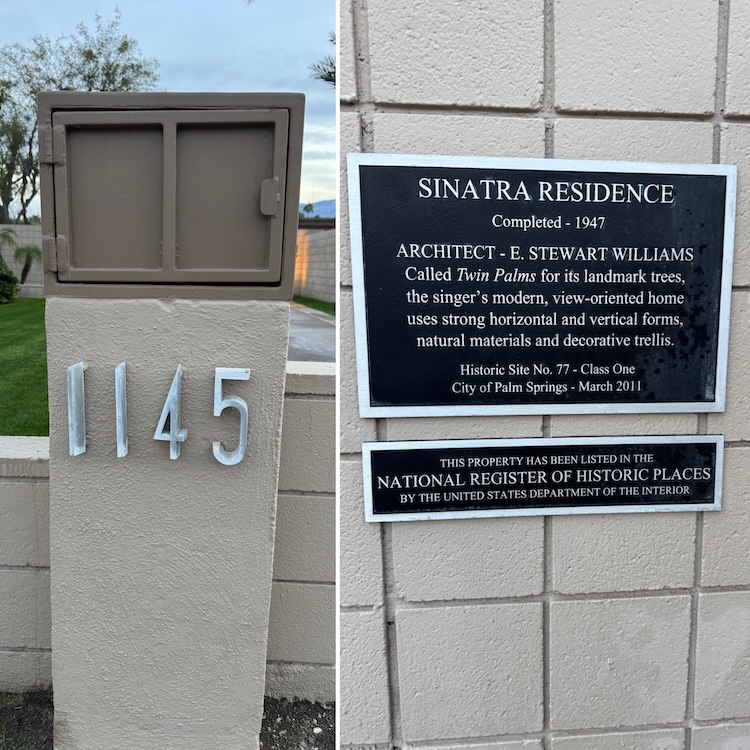
In the early 2000s, Twin Palms underwent a meticulous restoration that sought to honor its original design while updating it for modern use. Many of its period details were preserved, allowing guests to experience the home much as it appeared during Sinatra’s time. The estate was eventually designated a Class 1 Historic Site by the City of Palm Springs and later added to the National Register of Historic Places, cementing its status as a cultural and architectural landmark.
Celebrities That Visited Frank Sinatra's House in Palm Springs
Frank Sinatra’s Twin Palms estate in Palm Springs wasn’t just a private retreat—it was a magnet for Hollywood’s most famous names. During the late 1940s and 1950s, the desert home became a social hub where music, movies, and celebrity culture collided under the sun.
Among the most frequent visitors were members of Sinatra’s inner circle, including Dean Martin and Sammy Davis Jr., who would later form the core of the Rat Pack. The relaxed Palm Springs setting offered a break from studio pressures and a place where friendships—and legendary late nights—could unfold away from the spotlight. Humphrey Bogart and Lauren Bacall, who owned nearby property, were also known to socialize with Sinatra at Twin Palms.
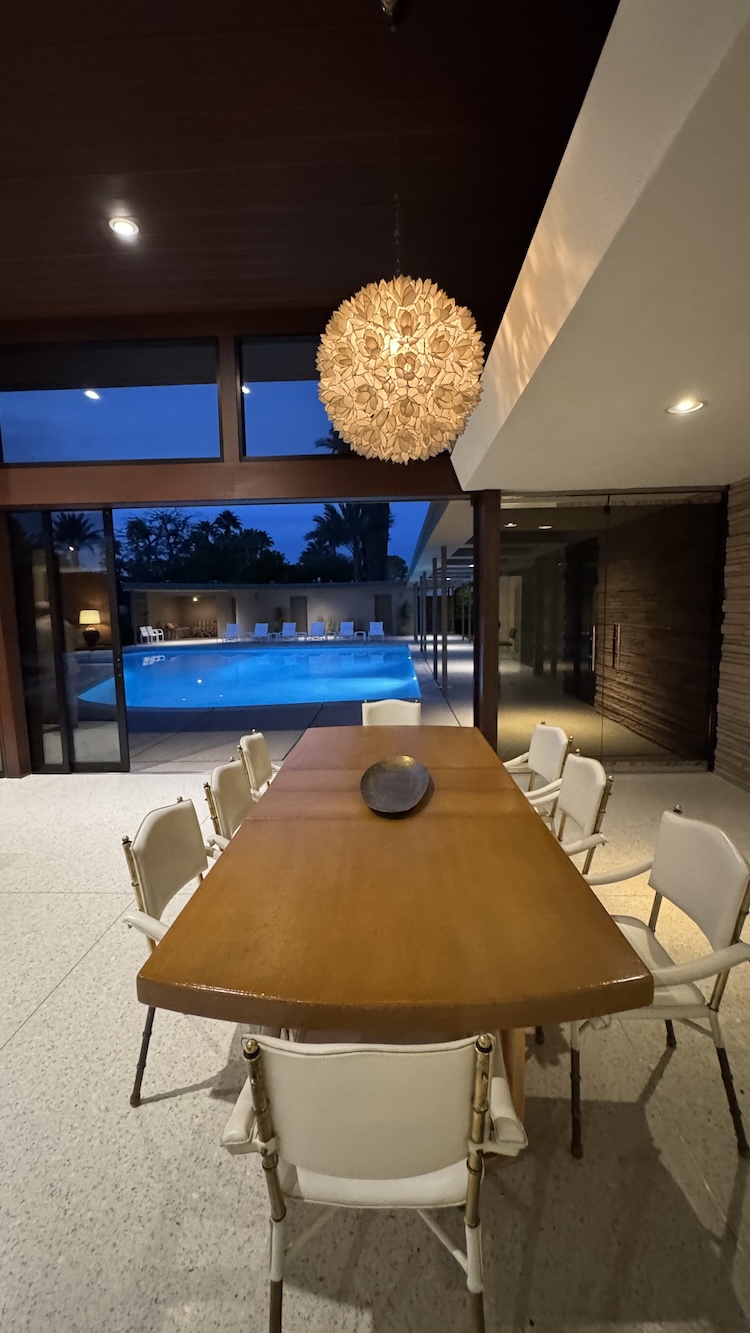
The home welcomed some of the era’s most glamorous stars, including Marilyn Monroe, whose friendship with Sinatra became part of Hollywood lore. Tony Curtis, Judy Garland, and other entertainers reportedly passed through the estate, drawn by Sinatra’s charisma and reputation as a generous host.
With cocktails by the pool, music drifting through open glass walls, and conversations stretching into the early morning, Twin Palms embodied mid-century Hollywood excess and camaraderie. Today, the stories of its famous guests add another layer of allure to the estate—one that continues to fascinate fans of Sinatra and classic Hollywood alike.
A Look Inside Twin Palms Today
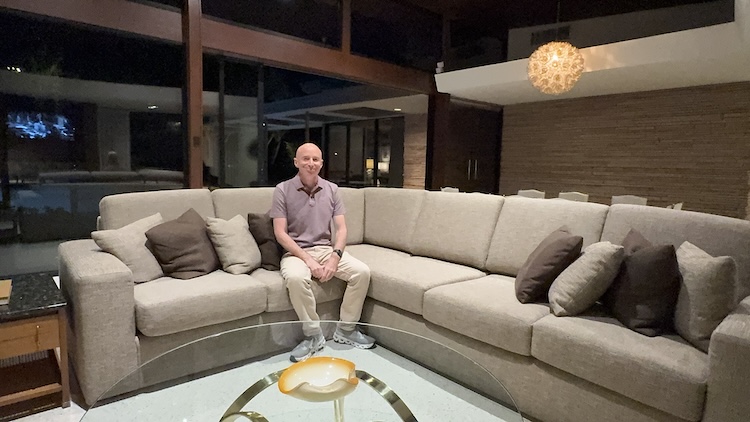
The home has been beautiful restored to its original look and tastefully resembles what it looked like when Frank Sinatra lived in Palm Springs.
I admit - it was a bit surreal walking past the piano shaped pool, seeing the iconic "twin palms", and into the living room. Some of Sinatra's classic tunes were playing softly played overhead as I had a chance to peek into all of the bedrooms and admire each area of the home.
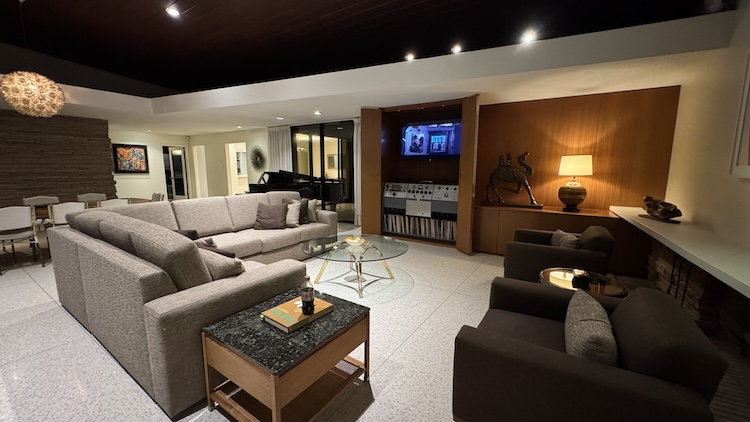
The living room was cozy with an L shaped couch that revolved around a vintage music system that is original to the home. The high-end audio gear was installed by Valentino Electronics of Hollywood and is a key fixture of the home. These days a few updates have been made with various artwork and of course - a flat screen television and wireless speakers. Can't forget the grand piano that compliments the gathering space.
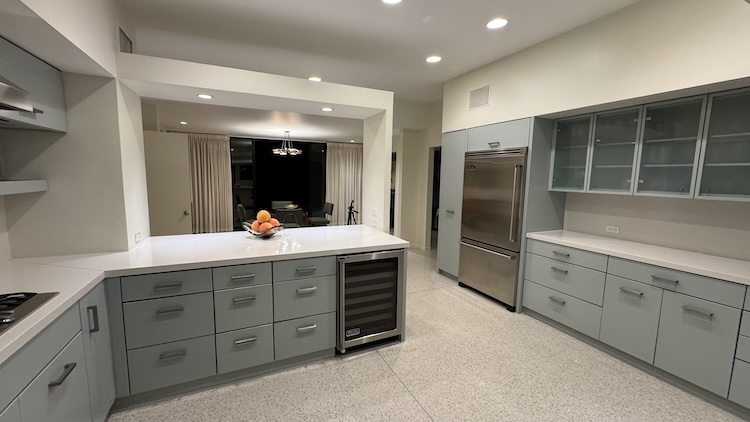
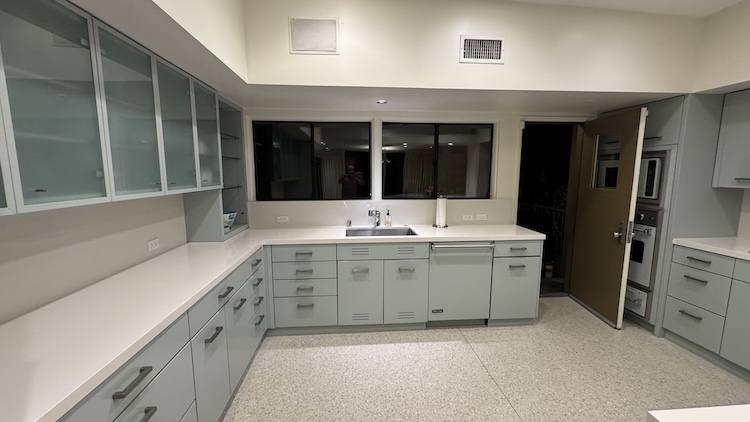
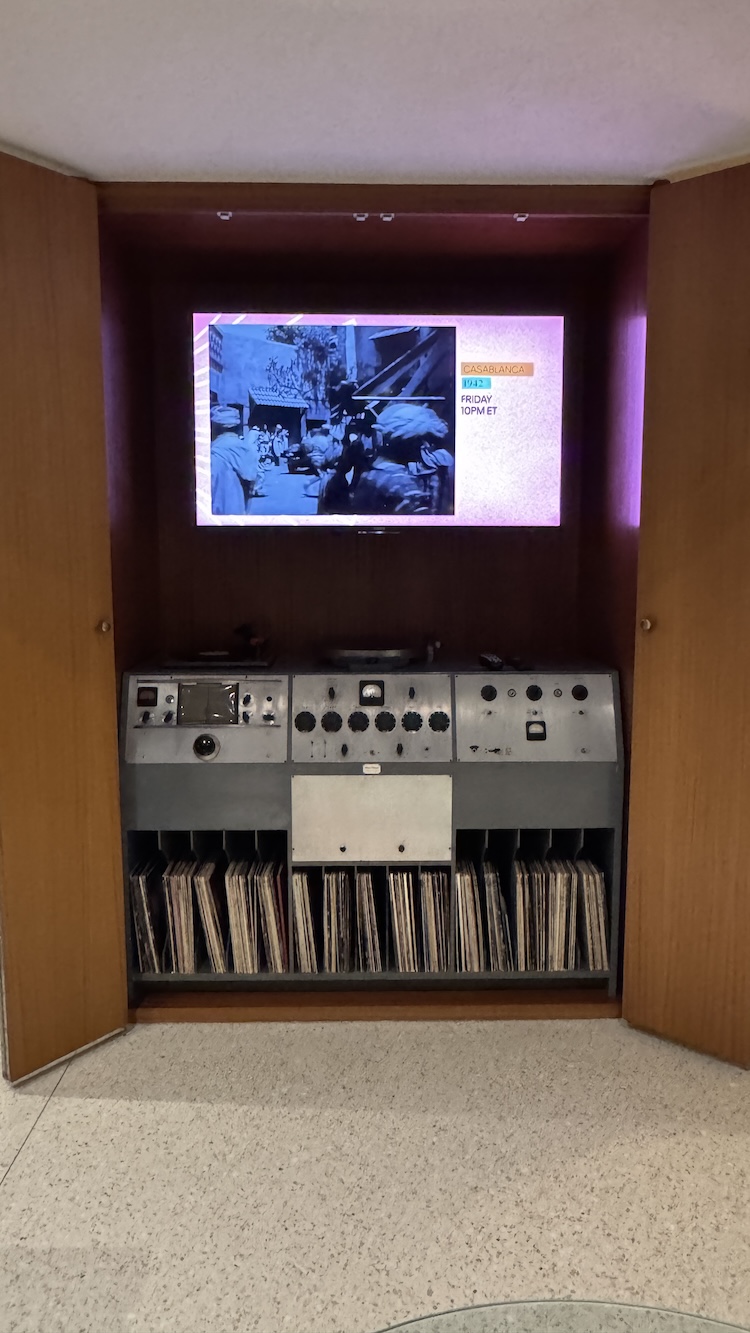
The kitchen was particularly cool as the cabinets all appeared to be original. It was spacious but not ridiculously large. There were two dining areas - one more formal than the other. The home had 7 bathrooms - perfect for all of the entertaining that took place here.
The best part was getting to stand inside of Frank Sinatra's bedroom at Twin Palms. His room had an incredible view of the piano shaped pool and mountains. Though none of the furniture is original to the room - one can imagine it might look pretty similar.
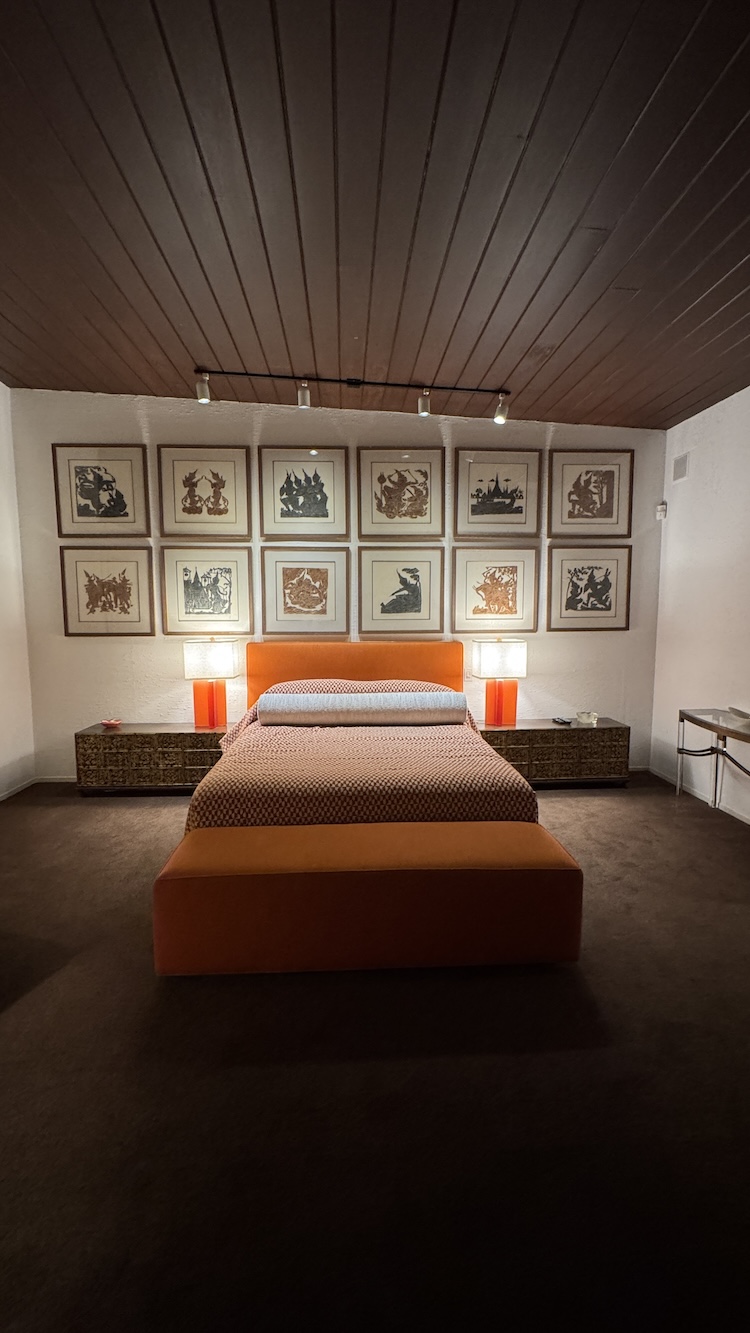
All these decades later, Twin Palms still remains a defining symbol of midcentury modern glamour. More than a residence, Twin Palms was a social hub—hosting Hollywood royalty, political figures, and legendary parties that shaped the mythos of Palm Springs as a playground for the elite. Today, the estate remains a carefully preserved landmark, capturing the spirit of postwar optimism, Rat Pack swagger, and the seamless indoor-outdoor lifestyle that helped define California modernism.